Most commercial buildings do not fail at EV charging because the chargers are bad. They fail because the infrastructure was not planned properly. What looks like a simple install can quickly turn into a switchroom problem, a compliance issue, or a costly rework if the building’s electrical backbone was never designed for future EV demand. A well-designed setup should be able to start with a handful of chargers, scale over time, and operate safely within the building’s available power and compliance requirements. In a market where tenant expectations are rising and power is limited, the buildings that plan early will have the clearest advantage.
📌 TL;DR - commercial EV charging infrastructure
- The key issue is available electrical headroom, not just charger hardware.
- Singapore installations must align with TR25:2022 and be certified by a Licensed Electrical Worker (LEW).
- Choose a hardware-neutral CPMS/CSMS so you do not get locked into one charger brand or platform.
- Build for the future by planning spare conduit, cable routes, and data infrastructure now.
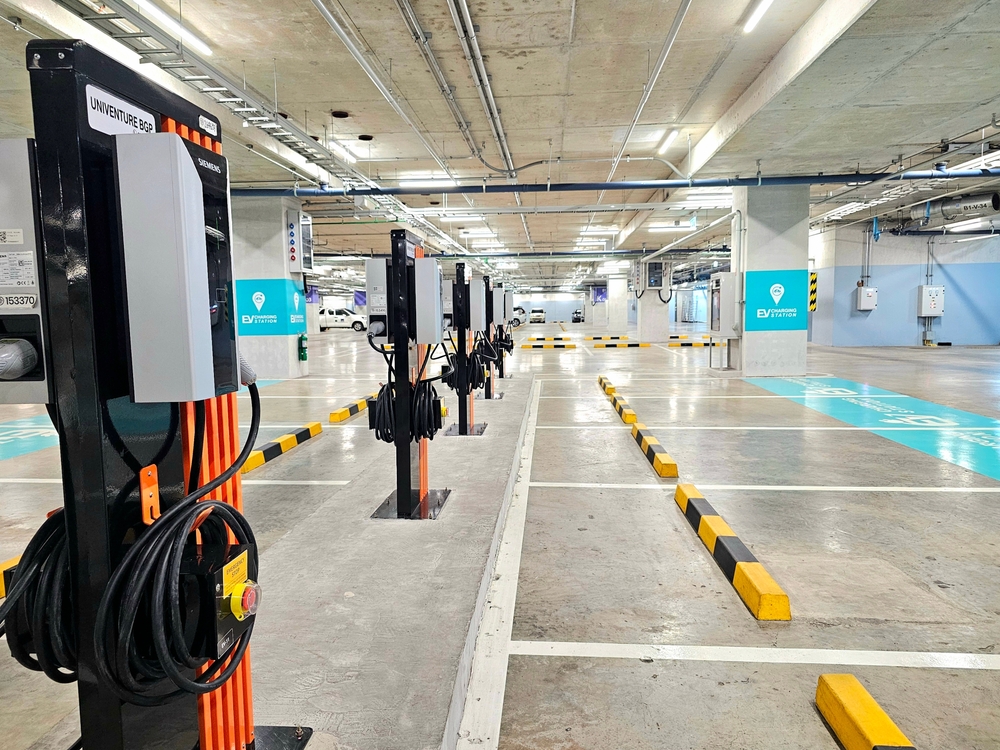
The first thing to understand about EV charging is that the charger itself is rarely the real problem. The real constraint is usually the building’s electrical capacity. A single DC charger can place a heavy load on the system, and if the site was never designed for that kind of demand, the project can quickly become more expensive than expected. That is why a load audit should come before charger selection.
A professional audit helps determine how much headroom is actually available in the switchroom, how much capacity is already committed to core building systems, and what can realistically be allocated to EV charging. This is where many projects either overbuild too early or underbuild and run into limits later. The goal is to design a charging system that works with the building’s load profile instead of fighting it.
In Singapore, EV charging installations must comply with the relevant safety and technical requirements, including TR25:2022, and must be endorsed by a Licensed Electrical Worker (LEW). Compliance affects fire safety, installation quality, grounding, waterproofing, communication protocols, and the building’s liability position if something goes wrong. For building owners and facilities teams, this means EV charging should be planned with the same level of care as any other electrical system upgrade. A good partner will not only supply the chargers, but also help ensure that the installation meets the technical and regulatory standards required for the site to operate safely and reliably.
The software layer behind the chargers is just as important as the electrical layer. A , and Charging Station Management System (CSMS or sometimes referred to as Charge Point Management System <CPMS>), isused to manage charging sessions, monitor usage, track billing, and support diagnostics. In practical terms, the terms are often used interchangeably.
What matters most is whether the platform supports OCPP, the Open Charge Point Protocol. OCPP-compliant systems are hardware-neutral, which means you can manage chargers from different manufacturers under one system. That flexibility matters a lot in commercial environments, where hardware may change over time but the building still needs one consistent management interface. It helps you avoid vendor lock-in and keeps future expansion options open.
The cheapest EV charging project is often the one that is designed correctly the first time. If you know the building may eventually need more chargers, the best time to plan for that is during the first installation. That means thinking beyond the visible charger hardware and planning the “passive” infrastructure too, such as conduit routes, cable trays, spare capacity, and access points for future expansion.
This is especially important for commercial and industrial properties that may scale from a few chargers to a much larger fleet or tenant-facing network. If the backbone is ready, expansion can happen with minimal disruption. If it is not, you may end up reopening ceilings, trenches, and switchrooms every time demand grows.
EV charging is no longer just an operational upgrade. For many property owners, it is part of a wider sustainability and asset-value strategy. Charging data can support carbon reporting, help tenants meet their own sustainability commitments, and strengthen the building’s position in leasing discussions. For industrial sites, especially those tied to energy, logistics, or maritime operations, visible EV infrastructure can also reinforce decarbonisation goals.
That is why the best EV charging projects are planned with more than just the present in mind. They are designed to support future reporting, future charging demand, and future electrical loads without creating unnecessary rework. A building that is ready for EV growth today is usually better positioned to protect value tomorrow.
FAQ - commercial EV charging infrastructure
Q: How much power does a commercial EV charger usually need?
Most commercial AC chargers are 7kW or 11kW, while DC fast chargers can range from 50kW to 150kW depending on the use case and site requirements. The right choice depends on how long vehicles will stay parked and how much electrical headroom the building has.
Q: Can EV charging be installed without upgrading the transformer?
Sometimes yes, but only if the existing electrical capacity can support the additional load. This is where Dynamic Load Management can help by balancing charging demand against the building’s real-time usage.
Q: What standards apply to EV charging in Singapore?
Singapore EV charging installations must align with TR25:2022 and be certified by a Licensed Electrical Worker. The requirements cover safety, installation quality, and compatibility with approved charging equipment.
Q: Why does hardware-neutral software matter?
It gives the building flexibility. If your management system supports OCPP, you can use chargers from different vendors without having to rebuild the entire software stack.
Q: Can EV charging support ESG reporting?
Yes. Charging data can be used to track usage patterns, support decarbonisation reporting, and contribute to wider sustainability disclosures.
If you are planning EV charging for a commercial or industrial building, the smartest move is to start with the building’s electrical reality, not the charger brochure. The projects that succeed are the ones that are designed around capacity, compliance, and future expansion from the beginning.
Eigen Energy is a trusted industry partner for turnkey EV charging solutions for commercial and industrial properties. We provide engineering-led assessments, hardware-neutral management systems, and compliant installations that are designed to scale with your building. Talk to our mobility experts about planning an EV charging system that works with your building, your tenants, and your long-term asset strategy.