
Guide to installing public EV chargers
A complete guide for commercial, retail and hospitality properties on installing public EV chargers, covering planning, electrical capacity, operations and scalability.
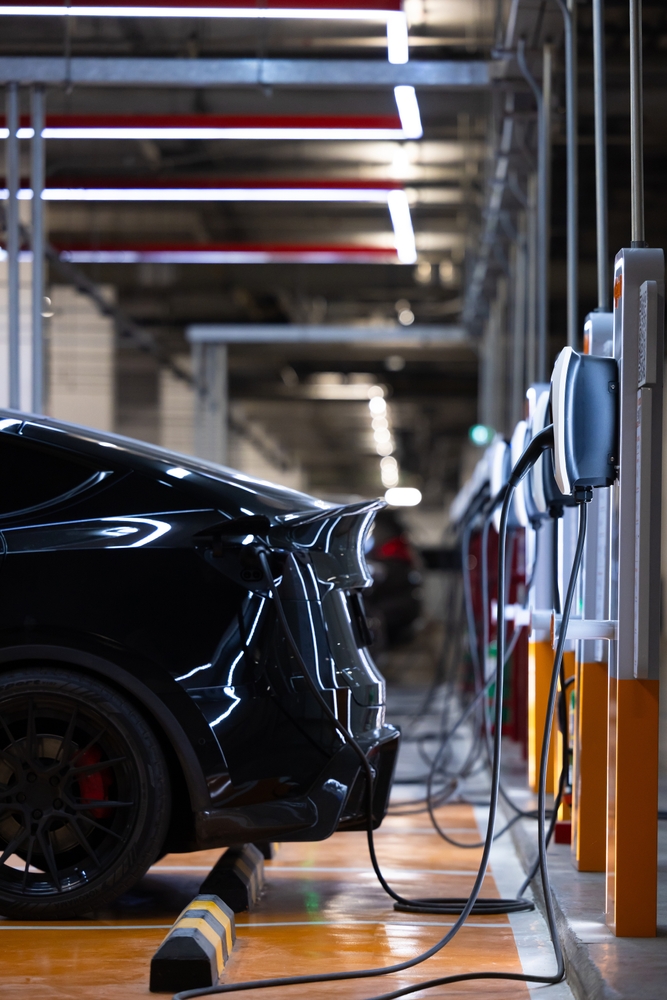
For commercial buildings, malls, hotels, and mixed-use developments, public EV charging is fast becoming a piece of core infrastructure, as essential to your building's operation as lifts, air-conditioning, or automated parking gantries.
However, the path to installation requires a nuanced understanding of your specific user behaviour, your building's electrical reality, and the digital systems required to keep the chargers running.
This guide provides a comprehensive walkthrough of the end-to-end considerations for installing public EV chargers, helping property owners and operators move from "thinking about it" to confident, informed decision-making.
TL;DR: Key takeaways for commercial, retail & hospitality properties
- Define your goal: are you driving footfall, generating revenue, or meeting green mark standards?
- Match hardware to behaviour: don't install fast chargers if users stay for 8 hours; don't install slow chargers if they stay for 30 minutes.
- Check power first: assess electrical capacity immediately to avoid costly operational disruptions later.
- Smart energy management: use software to balance power loads, preventing expensive grid upgrades.
- Safety is non-negotiable: strict compliance with local fire and electrical codes protects your asset and liability.
- Digital backbone: a robust Charging Station Management System (CSMS) is essential for billing, monitoring, and user experience.

1. Define the strategic purpose of your EV chargers
Before engaging vendors or engineers, clarify the business reason for the installation. Your objective dictates the hardware choice and pricing model.
- Tenant & visitor experience: are you trying to attract high-value tenants or premium hotel guests who demand EV charging as a baseline service?
- Revenue generation: is this a pure profit play intended to turn parking lots into revenue-generating assets?
- Sustainability & compliance: are you meeting specific Green Mark certifications or corporate ESG mandates?
- Future-proofing: are you preparing the asset for resale or long-term valuation?
Best practices: if your goal is amenity (e.g., a hotel), you might offer free or low-cost charging. If it is revenue (e.g., a public carpark), you need a competitive pricing strategy and high-turnover hardware.
2. Understand your users and dwell time
The biggest mistake property owners make is selecting chargers that don't match visitor behaviour. "Dwell time" defined by how long a car stays parked, is your most important metric.
- Hospitality (hotels/resorts): guests park overnight or for extended periods. Here, slower AC chargers are perfect; guests don't need speed, they need a full battery by morning.
- Retail & malls: shoppers typically stay 1–3 hours. A mix works best here: AC chargers for movie-goers or diners, and potentially a few DC fast chargers for "grab-and-go" visitors.
- Commercial offices & hospitals: staff park for 8+ hours (AC is ideal), while visitors or outpatients might park for 1-2 hours (faster AC or low-power DC is better).
Best practices: matching charger power to dwell time prevents over-spending on powerful hardware that your users don't actually need.
3. Choose the right charger types
Once you understand dwell time, the hardware choice becomes logical.
- AC chargers (7kW – 22kW): these are the workhorses of the built environment. Lower cost to buy and install, they are ideal for any location where cars park for 2 hours or more. They are less taxing on your building's power grid.
- DC fast chargers (50kW+): these are the "gas stations" of the EV world. They are significantly more expensive and require heavy electrical infrastructure. They are best reserved for high-turnover zones like highway rest stops, petrol stations, or short-stay loading bays.
Best practices: most commercial properties benefit from a hybrid approach, predominantly AC for the bulk of bays, with limited DC units for high speed use.

4. Assess electrical capacity early
Electrical capacity is the most common "hidden killer" of EV projects. You may have the budget for 20 chargers, but your building might only have power for five.
- The audit: engage a Licensed Electrical Worker (LEW) early to audit your main distribution board. Determine your spare capacity after accounting for peak building loads (e.g., air conditioning running at full blast).
- The constraint: if your grid connection is maxed out, you face a choice: pay for an expensive grid upgrade (new substations/cabling) or use smart software to manage the load.
Best practices: Never buy hardware before validating that your building can power it.
5. Plan for load management and future growth
You don't always need more power; often, you just need to manage what you have better. This is where dynamic load management (DLM) is critical.
- How it works: DLM software monitors real-time building energy usage. When the building uses less power (e.g., at night), it allocates more to the EV chargers. If 10 cars plug in simultaneously, it safely distributes available power among them so the breakers don't trip.
- The benefit: this allows you to install more chargers than your physical capacity would traditionally allow, avoiding the massive capital expenditure of upgrading your transformer or switchgear.
Best practices: DLM is essential for older buildings with limited power headroom and high-density sites.
6. Ensure regulatory and safety compliance
Public charging brings public liability. Compliance isn't just paperwork; it's asset protection.
- Safety standards: adherence to local standards (such as TR25 in Singapore) covers everything from the type of plug used to how the charger is earthed.
- Fire safety: fire codes may dictate where chargers can be placed (e.g., usually not near emergency exits or on certain basement levels) and may require specific fire-rated walls or sprinkler systems.
Best practices: Work with experienced partners to navigate the permitting, LEW sign-offs, and fire inspection processes smoothly. To find out more on the regulations around EV charging, you may be interested in this the article here: EV Charging Standards and Protocols in Singapore
7. Implement a Charging Station Management System (CSMS)
Hardware is useless without the "brain" to run it. A Charging Station Management System (CSMS) is the software platform that gives you control.
- Visibility: provides a dashboard showing real-time status on which chargers are in use, which are broken, and how much energy is being consumed.
- Monetisation: handles the complex work of user authentication, payment processing, billing, and invoicing.
- Alerts: automatically notifies your facilities team if a charger goes offline, allowing for quick fixes before a customer complains.
Best practices: Attempting to operate public chargers without a robust CSMS leads to manual billing errors and frustrated users. Read more here: Key Features Your CSMS Must Have

8. Design a seamless user experience
For a mall or hospital, a frustrated driver is a frustrated customer. The charging experience must be frictionless.
- Wayfinding: can users find the chargers? Clear signage from the carpark entrance is vital.
- Activation: activation should be simple, scanning a QR code or tapping an RFID card. Avoid forcing users to download complex apps or fill out lengthy registration forms just to charge.
- Transparency: pricing ($/kWh) must be clearly displayed before the session starts, with no hidden fees.
Best practices: Operational reliability and ease of use matter more to your reputation than the speed of the charger.
9. Prepare for ongoing operations and maintenance
Installation is only the start line. Chargers are industrial equipment exposed to public use and need maintenance.
- Remote diagnostics: your CSMS should allow for remote troubleshooting. Many "broken" chargers can be fixed with a simple remote reboot, saving the cost of a truck roll.
- SLAs: establish Service Level Agreements (SLAs) with your vendor. If a charger breaks, how fast will they fix it? 4 hours? 24 hours?
- Cybersecurity: as connected IoT devices, chargers need regular software updates to remain secure and functional.
Best practices: High uptime is critical. A row of "Out of Order" chargers damages your brand image significantly.
10. Scalability and interoperability
Don't design for 2024; design for 2030. Future-proof installations by ensuring:
- Scalability: lay the cabling and containment for future chargers now. It is much cheaper to run conduit for 20 bays during the initial build than to dig up the concrete again next year.
- Interoperability: ensure your hardware and software are "Open Standard" (OCPP compliant). This ensures you aren't locked into a single vendor and allows your chargers to potentially "roam" with other networks, making them visible to more drivers.
Best practices: Scalable design reduces long-term operational friction and avoids expensive retrofits as EV adoption grows.
FAQ
Q: How many chargers should I install initially?
A: Start with demand forecasting and plan infrastructure for expansion rather than overbuilding. It is often better to install a smaller number of chargers but lay the electrical infrastructure (cabling/conduit) for expansion. This allows you to scale up quickly as utilisation increases without over-spending upfront.
Q: Do EV chargers generate revenue?
A: Yes, depending on pricing strategy and utilisation, they can become recurring revenue assets.
Q: Is load management mandatory?
A: Not always, but highly recommended for sites with limited capacity.
Q: How long does installation take?
A: From planning to commissioning, the timeline varies by site complexity. A simple install might take 4-6 weeks, while a complex project involving grid upgrades, LEW submissions, and structural work can take 3-6 months. Planning and permitting usually take longer than the physical installation.
Public EV charging works best when physical infrastructure and digital systems are planned together. Looking to deploy a TR 25 compliant public charging network that maximizes uptime and revenue? Contact our team for your operational requirements.