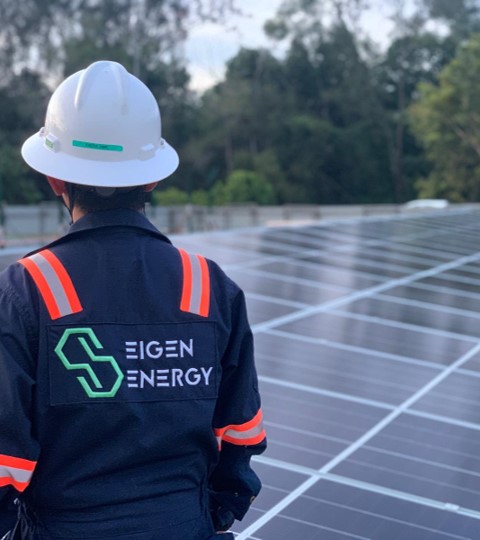
Solar leasing vs ownership for JTC buildings
Compare solar leasing vs ownership for JTC industrial buildings. Detailed analysis of costs, benefits, tax implications, and ROI to help you choose the best solar financing model for your facility.

If your company operates in a JTC industrial building, the push toward sustainable operations and rising electricity costs has likely prompted you to consider solar energy. Singapore's ambitious renewable energy targets and JTC's green building initiatives create both incentives and pressure for industrial facilities to adopt solar solutions.
The stakes in this decision are substantial. For a typical JTC facility with 10,000 square meters of usable roof space, the difference between leasing and ownership can represent hundreds of thousands of dollars in total costs and fundamentally different levels of control over your facility's long-term energy supply. Yet many companies make this decision based on initial cost considerations alone, without fully understanding the long-term implications of each approach.
This comprehensive guide breaks down the financial, operational, and strategic differences between solar leasing and ownership specifically for JTC building occupants. Whether you're a manufacturing company, logistics operator, or any industrial tenant, this analysis helps you make an informed decision aligned with your business objectives and financial position.
TL;DR - Solar Leasing vs Ownership quick comparison
Solar Leasing (PPA Model):
- Zero upfront capital investment required
- Pay only for solar electricity consumed at agreed per-kWh rate
- Solar provider owns, maintains, and insures the system
- Typical 15-25 year contract commitment
- Higher total cost over system lifetime (15-30% more than ownership)
- No asset ownership
- Cannot claim tax depreciation or investment credits
- Limited control over system operations and maintenance
- Electricity cost locked in but typically escalates annually (1-3%)
- Easier approval process for companies with limited capital
Direct Ownership:
- Significant upfront capital required
- Own the solar asset outright from day one
- Responsible for all maintenance, insurance, and operations
- Lowest total cost over 20-25 year system life
- Full tax depreciation benefits
- Complete control over system operations and upgrades
- Energy cost certainty
- Asset remains valuable beyond initial payback period
- Requires technical capability or O&M service contracts
- Better long-term ROI for financially stable companies
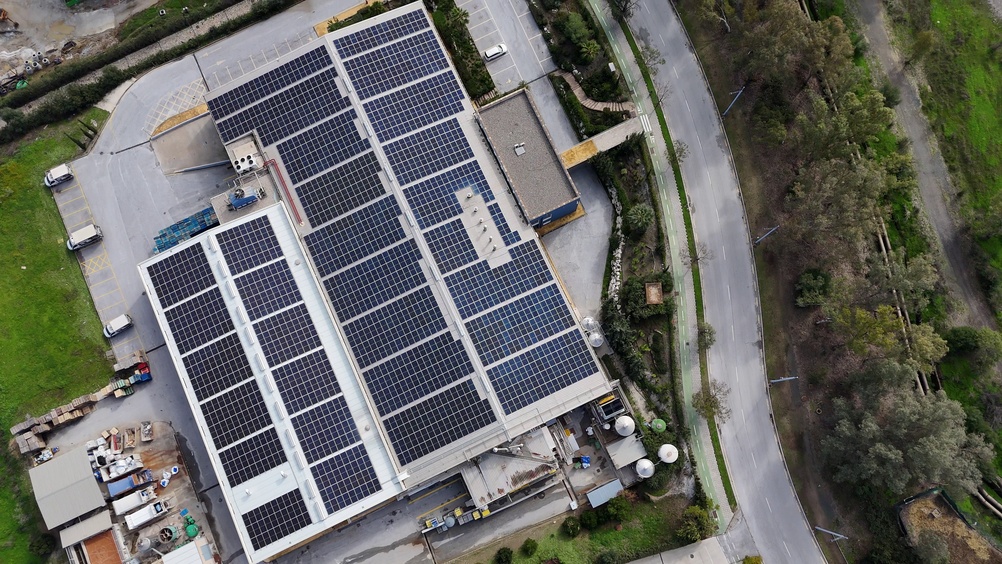
Navigating the financial and operational realities
Two fundamentally different approaches dominate the industrial solar market: solar leasing through Power Purchase Agreements (PPAs) where you pay a third party for solar electricity generated on your roof, or direct ownership where you purchase and own the solar system outright. Each model offers distinct advantages and trade-offs that affect your financial returns, operational flexibility, and strategic positioning over the 20-25 year lifespan of the solar installation.
What solar leasing means
Solar leasing is a model where a third party installs, owns, and usually maintains the solar system. Your business pays for the use of the system or buys the electricity it produces at a contracted rate. In many cases, this removes the need for a large upfront investment, which makes it attractive for businesses that want to conserve cash.
For JTC buildings, leasing can be a practical option when you want solar benefits without taking on the technical and financial burden of ownership. It is often easier to start with because the solar partner handles the design, installation, and operational responsibilities. That can be especially helpful for companies that do not want to spend time managing asset maintenance or system performance.
What solar ownership means
With ownership, your company pays for the system and owns it outright. That means the panels, inverter, and related equipment become your asset, and the electricity generated helps reduce your utility bills directly. Over time, this usually gives you stronger returns because you are not paying a third party for the right to use the system.
Ownership works best when the business has enough lease tenure left to enjoy the full benefits of the system. It also works well when the occupier has stable roof access, predictable electricity usage, and enough internal budget to fund the installation. If the building is expected to be occupied for many years, ownership can be financially more rewarding.
How to compare the two
The first factor to consider is upfront cost. Leasing usually has the lower barrier to entry, which makes it easier for businesses that want to preserve working capital. Ownership requires more capex, but it gives you more control over the system and often better savings over time.
The second factor is lease duration. If your JTC lease has a long remaining term, ownership becomes more attractive because you have enough time to recover your investment. If your lease is shorter or uncertain, leasing may feel safer because it reduces your exposure to long payback periods.
The third factor is control. Ownership gives you the final say on system performance, future upgrades, and how the asset fits into your longer-term facilities plan. Leasing gives you less control because the third-party provider owns the system and may set the operating terms. For some businesses, that trade-off is acceptable because it reduces complexity.
The fourth factor is operational responsibility. With leasing, the provider often takes care of maintenance and monitoring, which lowers the workload on your team. With ownership, your business must either manage the system directly or contract an O&M provider to do so. If your team is already stretched, that difference matters.
Non-financial considerations
While financial returns usually dominate solar investment decisions, several non-financial factors influence the optimal choice between leasing and ownership for JTC tenants.
JTC lease terms and building tenure
Your tenure in the JTC facility fundamentally affects which solar model makes sense. Solar systems deliver value over 20-25+ years, but this only benefits you if you occupy the facility long enough to capture that value.
Long-term tenure (15+ years remaining on JTC lease) strongly favors ownership. You'll likely remain in the facility through ownership payback (6-9 years) and capture many subsequent years of free electricity. The longer your certain tenure, the more ownership advantages compound.
Medium-term tenure (8-15 years) creates ambiguity. Ownership might achieve payback near the end of your occupancy, capturing some but not all long-term value. PPAs provide benefits during your occupancy without capital risk if you relocate. Consider your company's growth trajectory and relocation likelihood when tenure is uncertain.
Short-term tenure (under 8 years) makes ownership risky because you likely won't achieve payback before vacating. PPAs become more attractive, though you should carefully review early termination provisions. Some PPA contracts include penalties for early termination that could offset benefits if you relocate before contract expiry.

Sustainability reporting and corporate commitments
Increasingly, companies face sustainability reporting requirements and renewable energy commitments that influence solar structuring decisions beyond pure economics.
Renewable energy claims might be more defensible with ownership. Some sustainability frameworks distinguish between owned renewable generation, purchased renewable electricity, and renewable energy credits. Owned solar provides the strongest claim to renewable energy usage, while PPA-sourced electricity might be classified differently.
Carbon accounting for corporate emissions inventories clearly benefits from on-site solar generation regardless of financing structure. Both PPAs and ownership reduce Scope 2 emissions from purchased electricity. However, owned systems might receive preferential treatment in certain accounting frameworks or stakeholder perceptions.
ESG reporting to investors increasingly scrutinizes renewable energy commitments. Ownership demonstrates capital commitment to sustainability and builds renewable assets on the balance sheet, potentially creating stronger ESG narrative than purchased renewable electricity through PPAs.
Making your decision: key questions to ask
Every JTC roof has a different "solar signature." Whether you choose the long-term wealth generation of ownership or the immediate cash-flow benefits of leasing, the first step is an accurate technical audit.
Speak to a solution expert at Eigen to evaluate what your savings look like under both CapEx and PPA structures so you can make the decision that fits your 2026 business goals.