
In Singapore, solar projects rarely live in a vacuum of pure “debt vs equity.” Instead, they sit inside very practical commercial wrappers: the building owner may buy the system outright via an EPC contract, finance it with a green loan, sign a long term onsite PPA with a developer, or adopt a lease structure. Behind each model, banks and investors still care about debt, equity, and risk allocation, but for a property owner, what matters is who pays the CapEx, who owns the asset, and how cash flows are structured over 10–25 years.
TL;DR
- In Singapore, solar is typically financed through direct purchase, bank/green loans, solar lease, or onsite PPA, with some hybrid lease variants.
- CapEx maximises long term savings and asset control, but ties up capital and shifts all performance risk to the owner.
- Green financing allow you to own the system while spreading CapEx over time; they suit credit worthy owners focused on ROI and asset value.
- Onsite PPAs shift CapEx and performance risk to the developer in exchange for a long term energy or lease payment; they suit owners who want zero upfront cost and predictable Opex.
- Hybrid models (e.g., rent to own, portfolio structures) are emerging for SMEs and multi site portfolios, blending elements of ownership and as a service models.

1. Direct CapEx
What it is: the building owner pays for the system upfront (or out of existing CapEx budgets), hires an EPC, and owns the solar asset from day one. This is common for cash rich corporates and single owner industrial or logistics properties.
Strengths
- Highest lifetime savings: Once installed, the only costs are O&M; savings accrue directly to the owner for 20–25 years.
- Full control: Owner decides on design, O&M strategy, and future upgrades or repowering.
- Balance sheet asset: Can enhance property value and support green certifications or sustainable finance frameworks.
Trade offs
- High upfront CapEx competing with other projects (fit outs, machinery, expansions).
- Owner holds performance and technology risk; poor EPC choices can erode returns.
- Requires internal bandwidth to manage EPC tender, construction, and long term maintenance.
CapEx works best where the owner has long term site visibility, strong balance sheet, and a strategic preference for owning critical infrastructure.
2. Green financing
What it is: instead of paying 100% upfront, the owner uses a solar specific or green loan from banks like UOB, DBS, Maybank or similar to finance all or most of the installation cost. The system is still owned by the customer.
Strengths
- Match cash outflow with savings: Loan repayments can be structured so that net cash flow remains neutral or positive, especially for daytime heavy loads.
- Retain ownership benefits: Export credits, RECs (where applicable), and asset value stay with the owner.
- Attractive pricing: Green or sustainability linked loans can offer competitive rates aligned with ESG goals.
Trade offs
- Requires credit approval and adds leverage to the balance sheet.
- Interest costs reduce headline IRR compared with pure CapEx, though WACC may still be attractive versus PPAs.
- Covenants and reporting obligations vary by lender.
Loans are a strong fit for landed owners and corporates who want long term upside, are comfortable with moderate gearing, and view solar as an infrastructure investment.
3. Solar lease and PPA
What they are: in both models, a third party solar developer finances, owns, and operates the system on your roof.
- Under a solar lease, you typically pay a fixed monthly fee for use of the system.
- Under an onsite PPA, you pay per kWh of solar energy consumed at a tariff usually lower than the retail grid rate.
Terms often run 10–25 years, with options to extend, remove, or sometimes purchase the system.
Strengths
- Zero upfront CapEx: Developer finances the project; you pay only for energy or system use.
- Performance and O&M risk largely sit with the developer; underperformance impacts their returns more than yours.
- Predictable Opex: PPAs provide long term price visibility and often immediate savings vs grid tariffs.
Trade offs
- You do not own the asset.
- Contract complexity: termination clauses, step in rights, and rooftop access need to be carefully negotiated.
- Long term commitment of 10–25 years can become a constraint in future sale, redevelopment, or change of use scenarios.
Leases and PPAs are well suited to owners prioritising cash preservation or tenants with medium term site control, and to organisations that prefer to outsource technical risk and asset management.
4. Hybrid and emerging models
Beyond the main archetypes, the Singapore market is seeing more hybrid structures tailored to different risk appetites and corporate strategies. Examples include:
a) Lease to own / stepped PPAs
- Combine PPA like payments in the early years with a transfer of ownership after 5–10 years once a pre agreed notional is paid off.
- Attractive for SMEs that want zero or low upfront cost but eventual asset ownership and energy independence.
b) Portfolio financing and structured off take
- Developers aggregate multiple rooftop assets across industrial estates under one financing and off take framework to gain scale.
- Corporate groups may use corporate PPAs or virtual PPAs (vPPAs) for RECs and accounting benefits, even where electrons are not physically delivered onsite.
c) Blended finance / concessional lines
- In some cases, MDBs or climate funds co lend or guarantee to crowd in commercial banks for larger portfolios, lowering overall cost of capital.
These hybrid models still rely on the same building blocks: CapEx, loans, lease or PPA, but rearrange them to match specific credit profiles, ESG targets, or portfolio strategies.
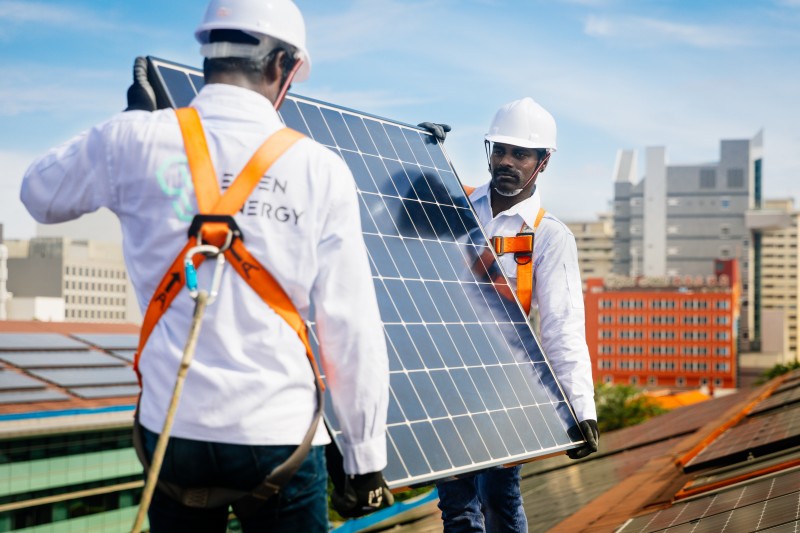
How solar developers and owners should think about “debt vs equity”
While building owners mostly see contract models, developers and IPPs still navigate the underlying debt/equity mix in their SPVs:
- PPA or lease portfolios are typically financed with a combination of sponsor equity and project debt, sized against contracted cash flows.
- Developers may use equity heavy early stages and debt heavy refinancing once the project is de risked and operating.
- The relative cost and availability of senior debt, mezzanine, and equity will influence the tariffs they can offer to offtakers.
In practice, the choice of CapEx vs PPA vs lease is tightly linked to what is financeable behind the scenes at acceptable returns.
FAQ
Q: What is the most common way to finance rooftop solar for commercial buildings in Singapore?
A: For single owner commercial and industrial properties, the two most common paths are direct CapEx (EPC purchase) and onsite PPA. Cash strong owners often prefer CapEx or bank loans to capture full savings, while others use PPAs for zero CapEx and outsourced O&M.
Q: Are solar leases and PPAs only for large corporations?
A: No. Several developers now offer C&I PPAs for mid sized factories and warehouses, and simplified lease / PPA models are emerging for SMEs and, in some cases, larger landed owners.
Q: How do bank loans compare financially to PPAs?
A: Over 20–25 years, owning via loan or green financing usually yields higher total savings, because once the loan is repaid you continue to enjoy low cost solar energy. PPAs trade some of that upside for zero CapEx and lower operational responsibility.
Q: Can I switch from a PPA to ownership later?
A: Many PPAs and leases include buyout options after a fixed lock in period. The economics depend on residual asset value, contract terms, and financing structure, so it’s important to negotiate this upfront.
Whichever route you choose, treat capital structure as part of your strategy, not an afterthought. Engage early with lenders, developers, and advisors to model scenarios, test sensitivities, and design a structure that’s bankable today and resilient over the life of the asset.


