
Before evaluating EPC providers, operations managers need clarity on the fundamental drivers of solar investment returns. This understanding transforms EPC selection from a procurement exercise into a strategic decision aligned with financial objectives.
TL;DR - Key ROI Maximization Strategies
EPC Evaluation Fundamentals:
- Total lifecycle cost analysis consistently outperforms lowest-bid selection for long-term ROI
- Technical competency, financial stability, and support capabilities matter as much as price
- Equipment quality differences can create 15-25% performance variance over 25-year system lifespans
- Installation workmanship directly affects system reliability, roof integrity, and warranty validity
Financial Analysis Requirements:
- Calculate NPV and IRR across multiple performance scenarios before selecting providers
- Account for degradation rates, maintenance costs, and potential downtime in ROI models
- Quantify warranty value as actual financial protection, not just marketing claims
- Include opportunity costs of suboptimal performance in total cost comparisons
Contract and Risk Management:
- Performance guarantees with specific kWh targets and remediation commitments protect returns
- Liquidated damages provisions create contractor accountability for schedule and performance
- Payment milestones tied to verified deliverables reduce financial risk during construction
- Clear warranty terms with documented claim procedures determine actual protection value
Post-Installation ROI Protection:
- Comprehensive monitoring systems enable proactive performance management
- Preventive maintenance programs outperform reactive approaches for long-term ROI
- Regular performance benchmarking identifies optimization opportunities
- Proactive O&M strategies typically improve lifetime returns by 8-12%

The ROI equation for commercial solar
Solar ROI depends on three primary variables: energy production over the system lifetime, total cost of ownership across all phases, and the value of energy generated based on avoided grid electricity costs and any export revenues.
Energy production depends on system design quality, equipment performance characteristics, installation workmanship, and ongoing maintenance effectiveness. EPC providers who invest in thorough site assessments, specify high-quality components, execute installations with precision, and support proactive maintenance programs consistently deliver superior energy production compared to those cutting corners in any of these areas.
Total cost of ownership extends far beyond installation costs to encompass maintenance expenses, component replacements, insurance premiums, monitoring costs, and potential repair costs from installation defects. Low installation prices from cost-cutting EPC providers frequently translate into higher total ownership costs through increased maintenance requirements, premature component failures, and expensive repairs addressing installation quality issues.
Energy value realization depends on system uptime, consistent performance near rated capacity, and minimized curtailment or downtime from equipment failures. Operations managers often underestimate how significantly downtime impacts returns. A system generating at 85% of capacity rather than 95% capacity represents not just a 10% production shortfall but potentially hundreds of thousands of dollars in unrealized returns across a 25-year operational period.
The compounding effect of performance differences
Small differences in system performance compound dramatically over long operational periods, creating substantial ROI variation between well and poorly executed installations. Consider a commercial installation where two EPC providers offer systems expected to produce 500,000 kWh annually. Provider A offers a system with 0.5% annual degradation using premium components, while Provider B offers a lower-cost system with 0.8% annual degradation using budget components.
In year one, the difference appears minimal. By year 10, Provider A's system produces approximately 475,000 kWh annually while Provider B's system produces approximately 460,000 kWh. By year 25, Provider A's system still produces 440,000 kWh while Provider B's system has degraded to 410,000 kWh. Cumulative over 25 years, this seemingly small initial quality difference translates to approximately 750,000 kWh of additional production from Provider A's system, representing substantial financial value depending on electricity pricing.
This compounding effect explains why operations managers focused exclusively on upfront cost minimization frequently achieve inferior long-term ROI compared to those prioritizing quality metrics in EPC selection. The financial mathematics strongly favour quality investment when properly modelled across realistic operational timescales.
Quantifying the true cost of EPC selection mistakes
Operations managers sometimes underappreciate the full financial consequences of suboptimal EPC selection because problems emerge gradually rather than immediately. Roof leaks from poor mounting work may not appear until the first monsoon season, inverter failures from improper installation may occur after manufacturer warranties expire, and systematic underperformance may be attributed to weather rather than installation quality without proper benchmarking.
Quantifying potential mistake costs helps calibrate appropriate investment in quality EPC selection.
- Roof repair costs from installation-related leaks typically range from S$5,000-15,000 per incident.
- Complete electrical system remediation from non-compliant wiring can cost S$20,000-50,000 depending on system size.
- Premature inverter replacement due to installation damage costs S$3,000-15,000 per unit.
- Accumulated underperformance from suboptimal installation can represent S$50,000-200,000 in unrealized returns over system lifetimes for commercial installations.
Against these potential costs, paying a quality premium of S$5,000-15,000 more for a superior EPC provider represents an excellent risk-adjusted investment. Operations managers who frame EPC selection in these financial terms make better decisions than those viewing quality premiums as unnecessary expenses.
Framework for evaluating EPC providers on ROI criteria
Systematic EPC evaluation frameworks replace subjective assessments with structured analysis that consistently identifies providers most likely to deliver strong long-term returns. The following framework organizes evaluation across five dimensions that most significantly affect solar ROI.
1: Technical competency and system design quality
Technical competency assessment begins with verifying credentials and licenses but extends to evaluating the sophistication of engineering approaches and depth of relevant experience. EPC providers with strong technical foundations design better systems, install more reliably, and diagnose problems more effectively than those with superficial capabilities.
Request detailed technical proposals from shortlisted providers, evaluating the depth and sophistication of their design approaches. Quality proposals include precise energy production modeling with clearly documented assumptions, detailed shading analysis showing site-specific shadow patterns throughout the year, structural load calculations confirming roof capacity, and electrical designs demonstrating compliance with Singapore Standards.
Assess the engineering qualifications of team members who will actually design and supervise your installation. Proposals developed by experienced engineers with relevant solar and electrical qualifications typically reflect more thorough analysis and better design decisions than those produced by sales teams working from templates. Ask to meet the engineers responsible for your project rather than relying on company-level credentials.
Production modelling accuracy is particularly important for ROI calculations. Providers with strong performance tracking capabilities can demonstrate correlations between their models and actual measured performance, a powerful differentiator from those who simply run software without validation.
Evaluate proposals for site-specific customization versus generic designs. Quality providers invest in understanding your specific property's characteristics including roof orientation and tilt, local shading patterns, electrical infrastructure constraints, and operational requirements. Generic proposals that could apply to any property with minimal modifications suggest insufficient site analysis that may result in suboptimal system performance.
2: Equipment quality and long-term performance implications
Equipment selection choices made by EPC providers during system design directly determine long-term performance trajectories. Operations managers who understand key equipment quality indicators can evaluate proposals more effectively and negotiate specification improvements when providers default to budget components.
Solar panel quality evaluation should focus on several key metrics. Efficiency ratings indicate power output per unit of roof area, affecting how much capacity can be installed in available space. Temperature coefficients determine how much performance degrades in Singapore's hot climate, with quality panels maintaining better performance in heat. Degradation rates, as discussed above, compound significantly over long operational periods. Warranty terms including both product and performance warranties indicate manufacturer confidence in their products.
Beyond specifications, research panel manufacturer financial stability and warranty track records. Panel warranties lasting 25 years are only valuable if manufacturers remain solvent throughout that period. Ask providers specifically about their rationale for panel selection and request independent performance data for proposed models.
Inverter selection deserves particular attention as these components contain complex electronics that directly affect system conversion efficiency and tend to require replacement during system lifespans. Premium inverter brands including SMA, Fronius, SolarEdge, Huawei, and Enphase offer superior monitoring capabilities, proven reliability records, and established local service networks in Singapore. Evaluate inverter efficiency ratings, warranty terms, monitoring capabilities, and availability of local technical support.
Balance-of-system components including mounting hardware, cabling, and electrical protection equipment represent a relatively small percentage of system cost but significantly affect reliability and longevity. Quality mounting systems use marine-grade aluminium and stainless steel hardware appropriate for Singapore's humid coastal environment. Appropriate cable specifications prevent premature insulation deterioration in UV exposure and heat. Proper electrical protection equipment ensures safety compliance and prevents equipment damage from grid disturbances.
3: Financial stability and long-term viability
EPC provider financial stability directly affects your ability to benefit from installation warranties and receive ongoing support throughout system operational lifespans. This evaluation dimension is often underweighted by operations managers focused primarily on project execution capability.
Request financial information from shortlisted providers including company registration details, years in operation, revenue trends, and credit references. Established companies with demonstrated revenue growth and stable operations present lower business failure risks than rapidly expanding startups or organizations with concerning financial metrics.
Assess insurance coverage including professional indemnity, public liability, and workmen's compensation insurance. Adequate insurance protects you from financial liability if installation work causes property damage or injuries, and demonstrates the provider's professional risk management practices.
Evaluate warranty fulfilment capability by asking providers about how they handle warranty claims, what financial reserves they maintain for warranty obligations, and how they would fulfil workmanship warranty commitments if facing financial difficulties.
4: Installation quality and project execution
Installation execution quality determines whether system designs translate into actual performance and whether electrical work meets safety and regulatory standards. This dimension is challenging to evaluate from proposals alone, making reference checking and site visits particularly important.
Evaluate installation methodology by requesting detailed installation plans showing how providers will handle roof penetrations, cable routing, electrical connections, and quality verification. Quality methodologies include specific waterproofing procedures for roof penetrations, professional cable management systems, systematic electrical testing protocols, and documentation processes creating verifiable installation records.
Assess project management capabilities by asking about team composition, supervision arrangements, quality control procedures, and communication protocols during installation. Operations managers typically have ongoing building management responsibilities during solar installations, making minimal disruption important. Quality providers plan installations to minimize operational impacts and maintain clear communication throughout projects.
Reference checking provides the most reliable installation quality assessment. Contact at minimum three references with similar commercial installations, asking specific questions about installation quality, schedule adherence, issue handling, and overall experience. Request permission to visit reference sites for physical inspection of installation quality indicators including cable management, equipment placement, waterproofing execution, and visual integration.
Consider whether providers use in-house installation teams or subcontractors. In-house teams develop company-specific expertise, receive consistent training, and maintain accountability to organizational quality standards. Subcontracted teams, while sometimes qualified, present higher quality consistency risks and create accountability gaps that complicate issue resolution.
5: Post-installation support and performance management
Post-installation support capabilities determine whether systems maintain designed performance levels throughout operational lifespans and whether issues are identified and resolved quickly when they occur. Operations managers often discover too late that providers who excel during sales and installation provide inadequate ongoing support.
Evaluate monitoring system capabilities included in proposals, looking for platforms that provide real-time performance visibility, automated alerting for performance anomalies, and historical analysis tools for trend identification. Panel-level or string-level monitoring provides more precise performance insight than system-level data alone, enabling faster identification of specific component issues.
Assess maintenance service offerings including preventive maintenance programs, response time commitments for reactive maintenance, and spare parts availability for critical components. Providers with dedicated service teams, local spare parts inventory, and clear service level agreements demonstrate organizational commitment to long-term customer success.
Ask about performance guarantee terms including specific production targets, measurement methodologies, performance deficit identification procedures, and remediation commitments. Vague performance guarantees provide little actual protection, while specific kWh production guarantees with clear monitoring and remediation mechanisms create genuine accountability for system performance.
Evaluate customer service accessibility and responsiveness by observing communication quality during the sales process. Providers who respond promptly, communicate clearly, and demonstrate genuine interest in understanding your requirements during sales typically provide better ongoing service than those exhibiting poor communication practices before they've received payment.
Financial analysis framework for EPC comparison
Systematic financial analysis transforms subjective EPC comparisons into evidence-based decisions grounded in projected long-term returns. The following framework enables operations managers to evaluate proposals on financial merit rather than presentation quality.
Building a comprehensive lifecycle cost model
Lifecycle cost models calculate total investment costs across complete operational periods, enabling apples-to-apples comparison between proposals with different upfront costs and ongoing expense profiles. Build models covering 25-year periods that capture all relevant cost categories. Capital costs include all upfront installation expenses: equipment, labour, engineering, permitting, and any required electrical infrastructure upgrades. Ensure models capture complete installed costs rather than just panel and inverter costs, as balance-of-system and installation labour often represent 40-50% of total project costs.
Operating costs encompass annual maintenance expenses, monitoring system fees, insurance premiums, and any ongoing service contract costs. These costs vary significantly across providers based on service offering scope and pricing. Providers with comprehensive maintenance packages may appear more expensive than those offering minimal support until total cost models reveal inferior lifetime economics from reactive maintenance approaches.
Capital replacement reserves account for expected component replacements during system lifespans. Inverters typically require replacement after 10-15 years at costs of S$3,000-15,000 per unit depending on size and specifications. Budget appropriately for these replacements in financial models and factor in how warranty terms from different providers affect replacement cost exposure.
Revenue projections model energy production value across system lifetimes, incorporating expected degradation rates, avoided electricity costs at current and projected future tariff rates, and any export revenue from grid-connected systems. Sensitivity analysis across different electricity price scenarios helps quantify returns under various market conditions.
Net present value calculations discount all future cash flows to present values, enabling direct comparison of investment alternatives with different cost and benefit timing profiles. Internal rate of return calculations identify effective investment yields that can be compared against alternative investment opportunities and hurdle rates.
Comparing proposals on ROI rather than price
Once lifecycle cost models are built for competing proposals, comparison should focus on projected ROI metrics rather than installation prices. A proposal with S$15,000 higher installation cost but S$50,000 better lifetime performance economics represents superior value despite appearing more expensive in simple price comparisons.
Build scenario analyses for each proposal examining base case, optimistic, and pessimistic performance assumptions. Proposals with superior equipment and stronger warranties typically show less variance between scenarios, reflecting reduced performance risk that has genuine financial value even when base case projections appear similar across providers.
Quantify warranty value differences across proposals by estimating the probability and cost of warranty events that different warranty terms do or don't cover. Longer workmanship warranties, more comprehensive performance guarantees, and more established manufacturer warranties all reduce financial risk exposure in ways that should be reflected in proposal comparisons.
Consider provider quality premiums as risk-adjusted investments rather than unnecessary expenses. If paying S$10,000 more for a quality EPC provider reduces the probability of S$50,000 in performance losses or repair costs from 40% to 10%, the expected value of that premium is S$15,000, a clearly positive investment regardless of whether problems actually materialize.
If you would like to find out more, you might like this article on: Comparing solar proposals: hidden costs that impact project ROI
Sensitivity analysis for risk management
Sensitivity analysis identifies how changes in key assumptions affect projected ROI, helping operations managers understand which factors most significantly affect investment success and where risk mitigation efforts should focus.
Analyse how ROI projections change across different energy production scenarios, recognizing that actual production may vary from estimates due to weather variability, performance degradation, or system issues. Proposals using conservative production estimates based on validated models typically deliver more reliable actual returns than those using aggressive projections to win contracts.
Model maintenance cost scenarios ranging from minimal reactive maintenance to comprehensive preventive programs, quantifying how maintenance investment affects long-term returns. Many operations managers discover that preventive maintenance investments deliver strongly positive returns through extended equipment lifespans and maintained performance levels.
Assess electricity price sensitivity by modelling returns across a range of future tariff assumptions. Singapore's electricity market trajectory toward higher prices in a carbon-constrained economy generally favours solar investments with locked-in zero marginal cost generation. However, verify that financial cases don't depend entirely on optimistic price assumptions.

Contract negotiation for ROI protection
Contract terms negotiated before project commencement determine your legal protections and recourse options if EPC providers fail to deliver promised performance. Operations managers who approach contract negotiation strategically secure protections that significantly affect actual investment returns.
Performance guarantee structures
Performance guarantees represent the most direct contractual ROI protection, creating legal accountability for energy production levels that form the basis of your investment case. Negotiate specific kWh production guarantees rather than vague references to system performance, as specific targets create clear accountability frameworks.
Guarantee measurement methodologies should specify exactly how production will be measured, what adjustment factors account for weather variability, and what monitoring systems provide authoritative production data. Guarantees that rely on contractor-controlled measurement systems without independent verification create disputes when underperformance is claimed.
Remediation commitments determine how contractors address production shortfalls when they occur. Financial compensation for energy deficits, system modifications to improve performance, or equipment replacements are common remediation approaches. Negotiate specific remediation timelines and escalation procedures to prevent prolonged performance shortfalls without contractor response.
Performance guarantee periods should ideally extend 10-25 years to provide protection throughout periods when equipment performance most significantly affects ROI. Shorter guarantee periods of 1-3 years provide minimal protection against the compounding performance differences that most significantly affect lifetime returns.
Payment Structure and Milestone Management
Payment structures that tie contractor compensation to verified performance deliverables protect your financial interests throughout project execution. Milestone-based payment schedules create accountability by withholding payment until specific achievements are verified rather than releasing funds on time-based schedules regardless of progress.
Typical payment milestones for commercial solar installations might include design approval and permits obtained, equipment delivery and verification, installation completion and electrical testing, utility inspection and grid connection approval, and performance verification after initial operation period. Each milestone should be clearly defined with specific verification requirements before payment release.
Retention amounts held after practical completion provide leverage for addressing defects or performance issues identified during initial operation. Standard retention terms of 5-10% held for 3-6 months after commissioning provide meaningful incentive for contractors to address punch list items and minor performance issues promptly.
Advance payment limitations protect your capital if contractors face financial difficulties during projects. Limiting advance payments to 10-20% of contract value ensures contractors have genuine financial stake in project completion while providing working capital for mobilization and initial procurement.
Warranty terms and enforceability
Equipment warranty pass-through provisions ensure that manufacturer warranties on panels and inverters are formally assigned to property owners, enabling direct warranty claims with manufacturers if EPC providers become unavailable. Request written confirmation that all equipment warranties transfer to your organization upon project completion.
Workmanship warranty terms should be negotiated to reflect installation complexity and your risk tolerance. Standard workmanship warranties of 2-5 years provide minimal protection for 25-year investments, while negotiations targeting 10-year workmanship coverage provide meaningful protection against installation quality issues that may emerge gradually.
Warranty claim procedure documentation should specify exact requirements for submitting claims, expected response timeframes, dispute resolution processes, and remediation timelines. Vague warranty language creates disputes when issues arise, while specific procedural documentation enables efficient resolution.
Third-party warranty insurance or performance bonds provide protection against contractor insolvency that renders workmanship warranties unenforceable. Some insurance products specifically cover solar installation warranties, providing financial protection even if the original installer ceases operations.
Liquidated damages and performance penalties
Liquidated damages provisions create financial accountability for project delays and performance shortfalls, incentivizing contractors to meet commitments and providing compensation when they don't. Negotiate specific daily rates for schedule delays and annual amounts for production shortfalls that reflect actual financial impacts rather than nominal penalties.
Delay damages should reflect actual costs of schedule extension including delayed energy production, extended project management costs, and any consequential impacts on building operations. Typical commercial solar installations might incur S$500-2,000 per day in delay costs depending on system size and project-specific circumstances.
Performance shortage damages should reflect the financial value of energy not produced, providing compensation that approximates actual investment return shortfalls. Calculating damages based on avoided electricity cost rates creates straightforward quantification that minimizes dispute potential.
Balance liquidated damages provisions with bonus incentives for exceptional performance or early completion where appropriate. Incentive structures that reward superior performance rather than purely penalizing shortfalls may motivate contractors more effectively than purely punitive approaches.
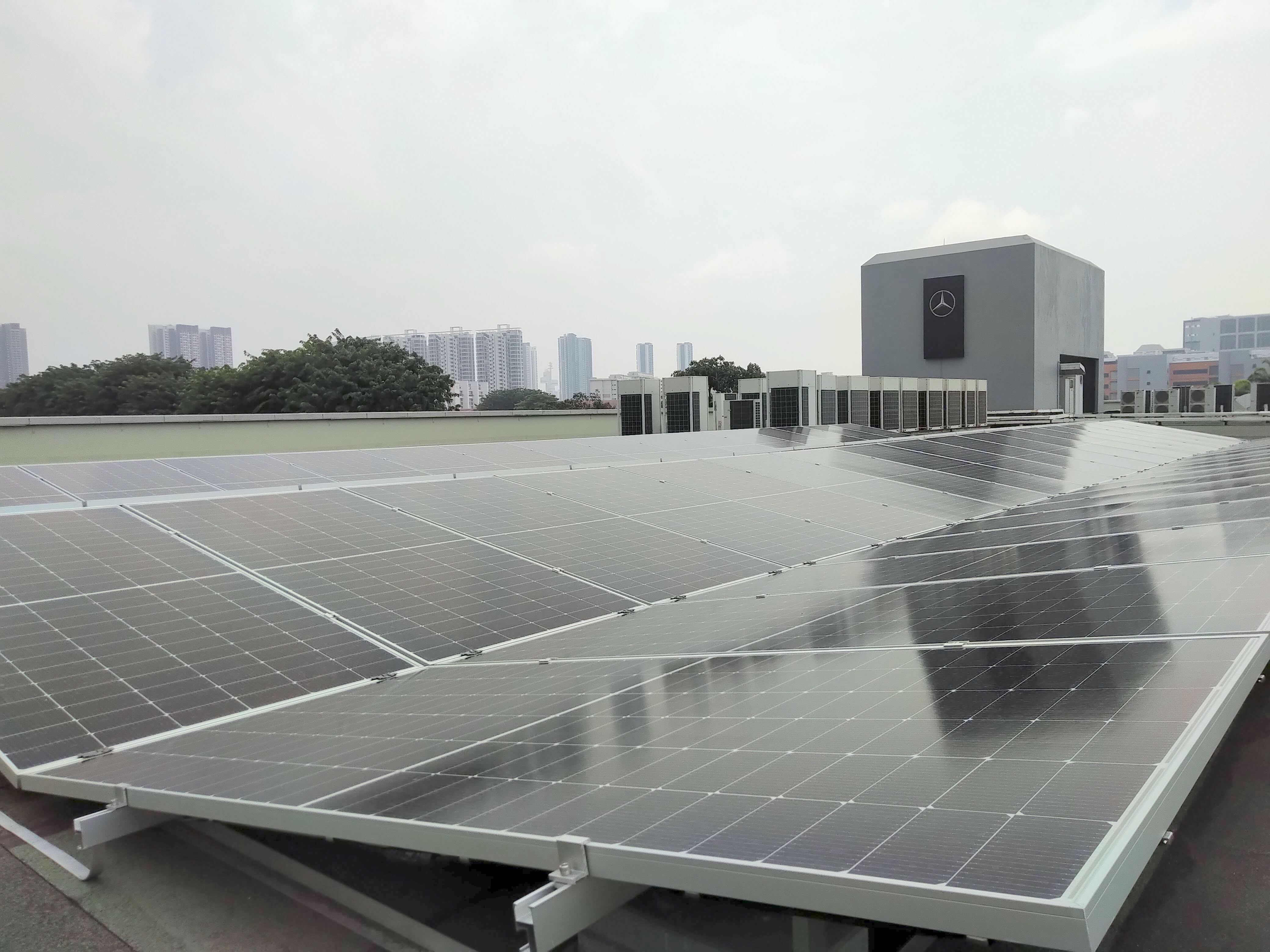
Post-installation ROI monitoring and optimization
Installation completion marks the beginning rather than the end of active ROI management for solar assets. Operations managers who implement systematic performance monitoring and proactive optimization strategies consistently achieve better returns than those treating systems as passive infrastructure.
Establishing performance baselines and benchmarks
Performance baseline establishment immediately after commissioning creates reference points for evaluating ongoing system performance and identifying degradation or equipment issues. Document system performance metrics including specific production levels, performance ratios, and energy yield figures during initial optimal operation periods.
Performance ratio benchmarking compares actual system output to expected output based on available solar irradiation, providing weather-normalized performance assessment that distinguishes genuine system issues from weather-related production variability. Systems performing significantly below benchmark performance ratios warrant investigation even during periods of reduced solar resource.
Industry benchmarking against comparable commercial installations in Singapore provides context for evaluating whether your system performs competitively or whether opportunities exist for performance improvement. Performance data from industry sources or peer operators enables this comparison, helping identify whether underperformance reflects system-specific issues or broader market conditions.
Implementing proactive performance management
Proactive performance management identifies and addresses issues before they significantly impact ROI, contrasting with reactive approaches that only respond after major failures become apparent. Regular performance analysis using monitoring system data enables early identification of developing issues including gradual efficiency degradation, partial shading changes, and individual component underperformance.
Monthly performance reviews comparing actual production to modelled expectations identify trends requiring investigation or action. Seasonal production patterns should align with expected solar irradiation profiles, with deviations suggesting potential performance issues. Year-over-year comparisons at equivalent weather periods help distinguish genuine performance changes from seasonal variability.
Preventive maintenance programs scheduled according to equipment manufacturer recommendations and local environmental conditions maintain system performance more cost-effectively than reactive maintenance responses. Annual or semi-annual maintenance visits should include panel cleaning, connection inspection, inverter diagnostics, and mounting system integrity assessment.
Continuous improvement and technology upgrades
Solar technology advances rapidly, creating opportunities to improve existing system performance through targeted upgrades. Operations managers who track technology developments identify upgrade opportunities that enhance returns on existing installations.
Monitoring system upgrades can provide more detailed performance visibility and better diagnostic capabilities without requiring equipment replacement. Advanced monitoring platforms increasingly offer machine learning capabilities that identify performance patterns and predict potential failures before they occur.
Inverter upgrades during normal replacement cycles provide opportunities to implement more recent technology with higher efficiency ratings, better monitoring capabilities, and improved grid interaction features. Planning replacement cycles strategically enables technology improvements that enhance returns during remaining system lifespans.
Panel cleaning and maintenance optimization based on performance data analysis identifies cost-effective maintenance intervals specific to your installation's environment and soiling patterns. Data-driven maintenance scheduling avoids both under-maintenance that compromises performance and over-maintenance that wastes resources.

FAQ
Q: How much should operations managers budget for quality EPC providers versus the lowest available quotes?
A: Quality EPC providers typically price 10-20% above the lowest available market rates, reflecting better equipment specifications, more experienced installation teams, and more comprehensive support services. Lifecycle cost modelling consistently shows this premium generates positive returns through better performance, reduced maintenance costs, and lower risk of expensive remediation work.
Q: What performance guarantees should operations managers require from EPC providers?
A: Minimum acceptable performance guarantees should include specific annual kWh production targets with clear measurement methodologies, at least 10-year performance guarantee periods with financial remediation for shortfalls, workmanship warranties of at least 5 years covering installation-related defects, and equipment warranty pass-through provisions formally assigning manufacturer warranties to property owners.
Q: How should operations managers handle situations where the preferred EPC provider has a significantly higher price?
A: First, verify that price differences reflect genuine scope or quality differences rather than inefficiencies. Request detailed cost breakdowns from all providers and identify specific differences driving price variations. If quality differences justify premiums, build financial models quantifying the ROI impact of quality differences to present to decision makers.
Q: What monitoring capabilities should operations managers insist on in EPC proposals?
A: Essential monitoring capabilities include real-time power generation data accessible via web and mobile platforms, automated performance alerts when production falls below threshold levels, historical production data enabling trend analysis, weather-normalized performance ratio calculations, and component-level visibility for string or panel-level performance. Advanced capabilities worth negotiating include predictive maintenance analytics, automated fault diagnosis, integration with building management systems, and regular performance reporting with insights and recommendations.
Q: How frequently should operations managers review solar system performance after installation?
A: Minimum review frequency should include daily automated monitoring for fault alerts, weekly production summaries comparing actual to expected performance, monthly detailed analysis comparing performance to models and previous periods, annual comprehensive performance assessments including physical inspection, and 5-year strategic reviews evaluating optimization opportunities and technology upgrade potential. More frequent review is warranted when performance concerns emerge or when systems are newly commissioned and performance patterns are being established.
Q: What should operations managers do if an EPC provider fails to meet performance guarantees?
A: Follow documented warranty claim procedures precisely, providing required performance data and formal written notices within specified timeframes. Engage EPC provider technical teams to diagnose performance shortfalls and evaluate proposed remediation plans. If initial responses are unsatisfactory, escalate through contractual dispute resolution procedures including mediation or arbitration as specified in agreements. Simultaneously, engage equipment manufacturers directly regarding any component-related performance issues covered by manufacturer warranties. Document all communications and actions carefully to support potential legal remedies if contractual performance obligations remain unmet.
Q: How do operations managers justify quality-focused EPC selection to cost-focused finance teams?
A: Quantify specific financial risks from lower-quality alternatives including probability-weighted costs of performance shortfalls, installation defect remediation, premature component failures, and warranty claim difficulties. Compare these risk-adjusted costs against quality premiums to demonstrate positive expected value from quality investments.

Why partner with Eigen Energy?
At Eigen Energy, we understand that operations managers need EPC partners who are as committed to your investment returns as you are. Our approach to commercial solar development prioritizes long-term performance and partnership over short-term transaction optimization.
What sets Eigen Energy apart for operations managers:
✅ Transparent financial modelling - detailed lifecycle cost analysis with conservative assumptions validated against our portfolio performance data
✅ Premium equipment standards - Tier-1 panels and inverters selected for Singapore's tropical climate with comprehensive warranty terms
✅ In-house engineering excellence - experienced engineers conducting thorough site assessments and optimized system designs
✅ Performance-backed guarantees - specific kWh production commitments with clear measurement methodologies and remediation obligations
✅ Comprehensive monitoring - real-time performance visibility with proactive management and automated alerting
✅ Long-term partnership commitment - dedicated support teams ensuring your assets perform throughout operational lifespans
✅ Proven commercial track record - demonstrated performance across diverse commercial property types in Singapore
Ready to maximize your solar ROI? Don't leave solar returns to chance. Partner with an EPC provider whose capabilities and commitments align with your investment objectives. Schedule a strategic consultation with Eigen Energy's commercial team today. We'll conduct a comprehensive assessment of your property, develop detailed lifecycle financial models comparing our approach against alternatives, and provide transparent quotations with specific performance commitments that protect your investment.


