
How to enable seamless EV charging roaming for international drivers
Unlock cross-border revenue and user experience. This guide details the technical solutions CPOs and eMSPs need to adopt to enable seamless, app-free EV charging for international drivers.
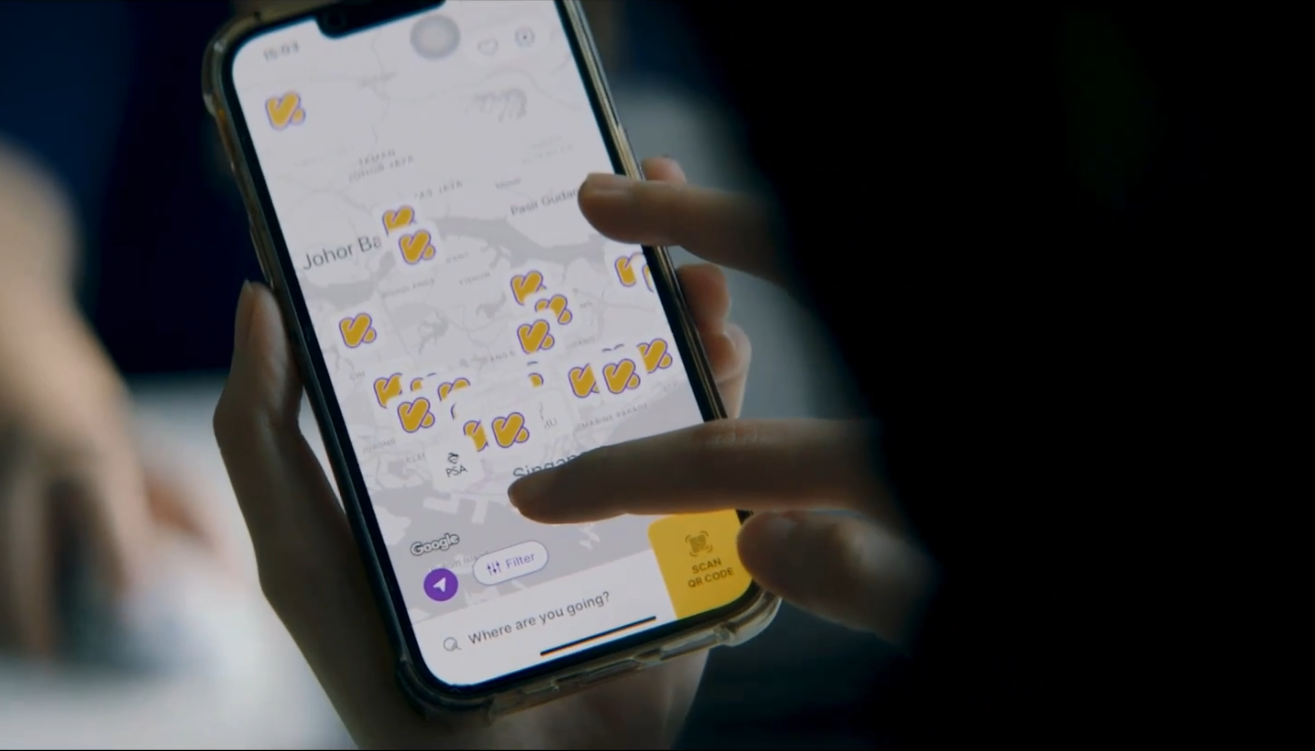
International or cross-border drivers are often met with a fragmented landscape: multiple apps, different RFID cards, complex registrations, and foreign currencies. This "app overload" is not just an inconvenience; it is a major barrier to cross-border logistics and tourism, particularly within regional blocs like ASEAN.
These issues become especially pronounced for logistics fleets moving frequently between Johor and Singapore, tourists driving into Singapore, and regional commercial operators adopting EVs across ASEAN. Without roaming, even mature charging networks remain siloed, restricting long-distance mobility, disrupting operations, and ultimately hindering economic activity across borders.
For Charge Point Operators (CPOs), this fragmentation means missed revenue opportunities, as their hardware remains inaccessible to millions of potential international users. The solution lies in roaming, the ability for an eMSP (the service provider whose app the driver uses) to communicate with a third-party CPO (the owner of the physical charger).
📌 TL;DR: the roaming imperative
- The Problem: fragmented networks and incompatible apps create "app overload" and range anxiety for international drivers.
- The Solution: adopting open, standardized communication protocols, primarily OCPI (Open Charge Point Interface).
- Key Benefit: maximize network utilisation, simplify billing, and enable cross-border logistics and tourism.
- Mechanism: OCPI allows an eMSP to communicate with a third-party CPO to authorize charging, exchange session data, and handle billing clearance.

Enabling seamless roaming requires standardized communication between all players. Two protocols have emerged as industry standards.
A) OCPI (Open Charge Point Interface) the core enabler of interoperability
OCPI is the industry’s preferred protocol for enabling roaming. It creates a secure, real-time communication link between the eMSP (the app the driver uses) and the CPO (the owner of the charger). OCPI handles two crucial functions in real-time:
- Authorization: the CPO's system can verify the identity and account status of an international driver via their eMSP e.g., verifying an RFID card or app request.
- Payments: charging session data (kWh consumed, session time, cost) is securely exchanged for accurate billing in the driver's home currency.
B) OICP (Open InterCharge Protocol) the hub model alternative
Often used by central hubs or clearing houses to manage multiple roaming agreements, OICP (Open InterCharge Protocol) is another roaming protocol, typically used in Europe, often integrated into roaming hubs such as Hubject.
While OCPI enables direct peer-to-peer connections, OICP is designed for central clearing houses, making it suitable for markets where CPOs prefer to centralise roaming agreements under a single umbrella platform.
Both protocols have the same goal: interoperability, but OCPI has become the dominant choice globally due to its modular design and flexibility.
Learn more about the protocols here EV Charging Standards and Protocols in Singapore 2025
The commercial benefits for CPOs and eMSPs
Adopting open roaming standards is not a cost, it is a clear business enabler:
For the CPO: roaming instantly opens up their network to all subscribers of partner eMSPs, increasing charger utilisation and generating new revenue from international drivers who otherwise could not use the hardware. If you are a CPO, this article might interest you: How Roaming Agreements Benefit Charge Point Operators
For the eMSP: roaming significantly enhances the value proposition of their subscription service. Their app / RFID card becomes a passport to charge anywhere, eliminating range anxiety and improving customer loyalty.
Increased utilization: higher throughput on chargers accelerates the Return on Investment (ROI) for expensive infrastructure upgrades.

Cross-border EV readiness is critical for trade and tourism. Enabling OCPI roaming protocols is the key from facilitating cross-border logistics to ensure electric delivery vans and trucks operating between Singapore and Malaysia can refuel easily at any participating depot or public station without multiple subscriptions, and encouraging tourism: allowing tourists driving into Singapore to utilize local CPO networks using their overseas accounts, driving revenue for local businesses.
By proactively adopting and standardizing around OCPI, the region can demonstrate technological leadership and accelerate the transition to electric mobility.
🔎 FAQ: roaming implementation
Q: Does OCPI require me to change my physical charging hardware?
A: No. OCPI is a software-to-software protocol. It requires your Charging Station Management System to be upgraded to support the OCPI API, but the physical charger hardware (AC or DC units) does not need to be replaced.
Q: Who sets the price for a roaming session?
A: Generally, the CPO sets the base price for the energy consumed. The eMSP may add a small service fee to the driver, but the pricing mechanism is agreed upon bilaterally (or via the Hub) and communicated to the driver before the session starts.
Q: What is the main challenge of implementing OCPI?
A: The main challenge is achieving secure and reliable data synchronization between two different corporate IT systems. It requires continuous maintenance and ensuring the CSMS and eMSP platforms are always speaking the same version of the OCPI protocol.
Q: Is roaming required by government regulation in Singapore?
A: While specific mandates for public network roaming are evolving globally, Singapore's push for interoperability and a stable EV ecosystem strongly encourages the adoption of open standards to ensure widespread access and confidence in the network.