The world is entering a new era of computation. As AI driven workloads surge, hyperscale and mid scale data centres are expanding across key markets across almost every continent. These facilities are the backbone of cloud computing, generative AI, and digital services that underpin modern economies. But they also come with a hidden cost: enormous electricity demand. A single hyperscale data centre can consume as much power as 100,000 homes, and when stacked on top of existing industrial and residential loads, it raises a fundamental question: can renewable energy scale fast enough to keep up?
For renewable energy integrators and energy transition leaders, the “AI energy paradox” is not just a policy abstraction; it is a live operating environment. On one side, AI promises to optimise energy systems, improve grid balancing, and accelerate decarbonisation. On the other, the compute intensity of AI training and inference is straining grids that are already under pressure to reduce emissions. Reconciling these two trends will define how quickly and how fairly the global energy transition unfolds.
TL;DR
- The world’s data centre boom, driven by AI and cloud computing, is creating huge new electricity loads just as national grids aim to decarbonise.
- Solar and other renewables are constrained by land, intermittency, and grid integration bottlenecks, so clean power supply does not scale instantly.
- Many tech companies claim net zero commitments, but their projected growth trajectories often outpace available clean power capacity
- For energy transition players, the paradox is also an opportunity: aligning AI driven demand with solar, storage, and grid sensing technologies can turn data centres from “emissions spikes” into anchor loads for clean energy infrastructure.
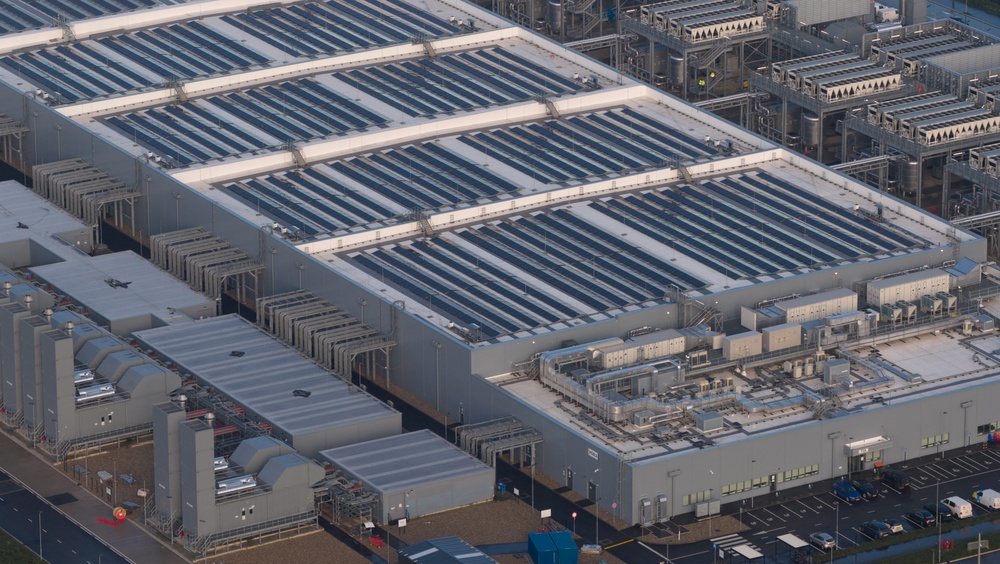
The global data centre boom is not a future scenario; it is already underway. Driven by AI driven workloads, cloud adoption, and digital transformation strategies, hyperscale and mid scale facilities are being built at an unprecedented rate. In land constrained markets like Singapore, the impact is visible on the grid and in planning documents. In more spacious regions such as the US South and Northern Europe, the expansion is driven by cheap land and favourable climates, but the energy intensity remains the same: a single hyperscale facility can draw as much power as 100,000 homes (source: IEA.org). When several such projects cluster in one region, the cumulative load can rival or even exceed the demand of an entire city.
At the same time, national governments and regional markets are pushing to decarbonise their grids. Solar PV capacity has grown steadily, but every additional megawatt of solar must be paired with storage, grid stabilising devices, and demand management tools to avoid overloading the network. The challenge is not just generation; it is the entire “system value” of renewables, how they integrate with industrial, commercial, and residential loads, and how they respond to the variable patterns of data centre demand.
For AI driven data centres, this creates a paradox. On the one hand, AI is used to optimise energy system operations, predict solar and wind output, and manage grid balancing in real time. On the other hand, the training and inference workloads behind large scale AI models are exceptionally energy intensive, with some models consuming more electricity in a single training run than an average household does in years. When tech companies pledge net zero by 2030 or 2040, they typically rely on a combination of renewable energy procurement, carbon offsets, and efficiency improvement targets. But if the underlying growth rate of compute demand outpaces the deployment of clean power infrastructure, the math begins to break.
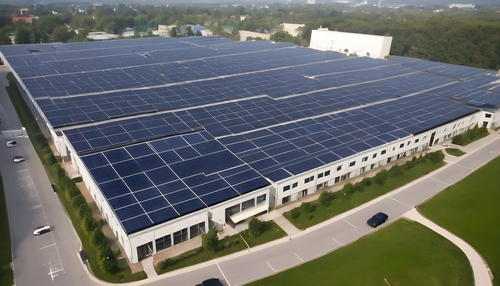
The core question is not whether AI is “good” or “bad” for climate; it is whether the sector’s growth trajectory is reconcilable with realistic clean energy supply curves. In key markets, the answer depends on how quickly solar and storage can be deployed on rooftops, industrial park structures, and other brownfield sites, and how tightly those assets are integrated with the loads that need them most. For renewable energy integrators, this means re thinking data centres not as “grid vampires” but as anchor customers for distributed solar and storage. If a data centre can be offered a package that includes on site solar, behind the meter storage, and EV charging ready infrastructure, it becomes a testbed for the kinds of integrated, smart energy systems that can be replicated across malls, warehouses, hospitals, and industrial parks.
That also implies a new set of expectations for tech companies. Net zero pledges are important signalling tools, but they must be backed by concrete choices: locational decisions (co locating with solar or storage assets), efficiency driven hardware and software choices, and transparency about the energy mix powering specific workloads. In a world where every kilowatt hour of solar generation is precious, the “energy efficiency per compute unit” metric may become as important as total compute capacity. In that world, the most competitive data centres will be those that pair AI workloads with resilient, low carbon, and locally sited energy systems.

FAQ
Q1: Can solar power actually keep up with AI driven data centre demand globally?
Solar can help, but it cannot single handedly offset the full load of a hyperscale data centre given land and grid constraints. However, when combined with storage, demand response, and efficiency driven design, solar can meaningfully displace fossil fuel based power and reduce the rate at which grid emissions grow.
Q2: Are data centres incompatible with net zero goals?
They are not inherently incompatible, but unchecked growth can make net zero harder. If data centres are paired with clean energy infrastructure, efficiency driven operations, and transparent reporting, they can be part of a decarbonised digital economy rather than a drag on it.
Q3: How can tech companies reconcile AI growth with decarbonisation?
Key levers include:
- Choosing locations where clean power procurement or on site renewables are feasible.
- Investing in energy efficient hardware, cooling, and workload scheduling practices.
- Aligning expansion plans with measurable grid emissions and renewable supply projections, not just abstract “green energy” certificates.
Q4: What role can integrated energy solutions providers play?
Renewable energy integrators can bundle solar, storage, and digital monitoring tools around data centre sites, turning them into anchor loads for clean energy infrastructure. This model can be replicated across other energy intensive sectors such as logistics, manufacturing, and healthcare.
Q5: Is this an AI specific problem, or is it a broader digital economy challenge?
It is both. AI is an extreme example of compute intensity, but the underlying tension between digital growth and clean energy supply applies to cloud services, streaming platforms, and large scale online platforms as well. The AI data centre boom simply makes the trade offs visible and urgent.
If you are a data centre operator, AI startup, or industrial landlord anywhere in the world, the AI energy paradox is not just a policy question, it is a business design question. How you power your compute, how you source your energy, and how you integrate solar and storage will shape your emissions profile, regulatory risk, and long term operational costs. Want to explore how on site solar, storage, and EV ready infrastructure can be tailored to your data centre or industrial site? Reach out to us to design an integrated energy transition plan that aligns AI growth with global decarbonisation goals or to schedule a consultation on turning your facility into an anchor load for clean energy infrastructure.