
Solar panel types for Data Centres
This guide compares solar panel technologies addressing the unique challenges of 24/7 power demands to help facility managers make informed decisions.
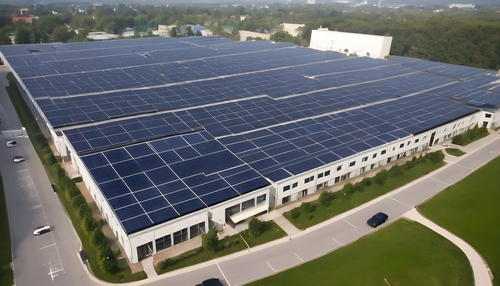
Data centres face a unique solar challenge. Unlike residential or commercial buildings, every square metre of roof space must work harder. You're powering infrastructure that can't afford downtime, the solar panel type you choose isn't just about efficiency ratings on a spec sheet, it's about matching technology to the specific demands of mission-critical infrastructure.
TL;DR
- Monocrystalline panels offer 20-22% efficiency, ideal for limited roof space, but cost 15-20% more upfront
- Polycrystalline panels provide 15-17% efficiency at lower cost, suitable for larger facilities with more roof area
- Thin-film panels handle tropical heat better but need 2-3x more space, rarely practical for data centres
- Bifacial panels can boost output by 10-20% by capturing reflected light, particularly effective on white roofing common in data centre
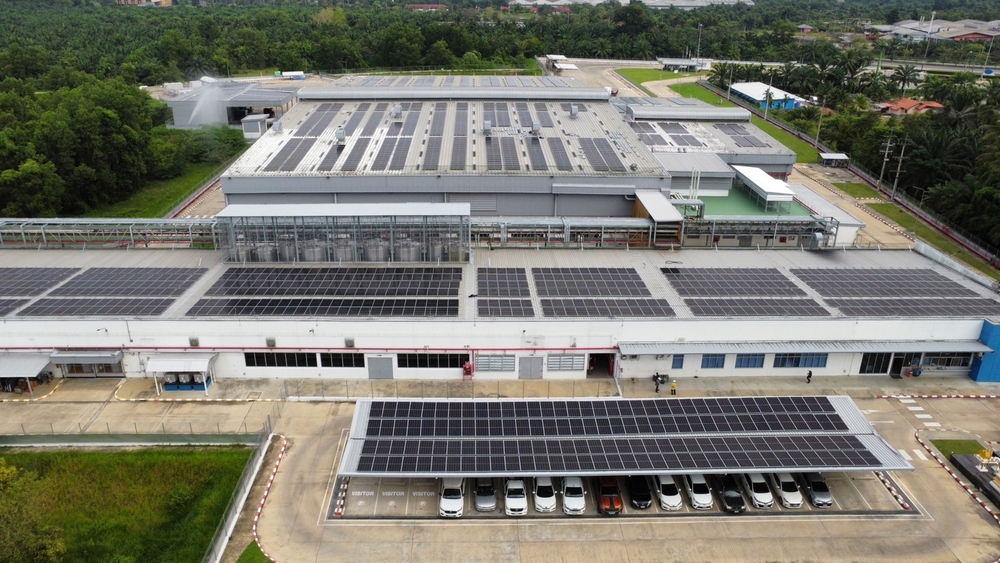
Most data centre operators approach solar panels the same way they approach servers: looking for the best specs at the best price. It's logical. It's also incomplete.
Solar panels aren't interchangeable components. Data centres demand more from their solar installations than almost any other building type. Higher power density per square metre. Longer operational lifespans to justify capital expenditure. Understanding this constraint is the starting point for every other decision about panel technology, mounting systems, and system design.
Monocrystalline
Monocrystalline silicon panels have become the de facto standard for tropical data centres, and the reason is mathematical.
With efficiency ratings between 20-22%, these panels generate approximately 400-450 watts per 1.7 square metre panel. When you're working with perhaps 1,000-2,000 square metres of usable roof space on a typical colocation facility, that efficiency difference compounds quickly. A monocrystalline array might generate 200-250 kW where polycrystalline delivers 170-200 kW on the same footprint.
Why this matters for data centres:
Recent installations across the region demonstrate this practically. With limited roof real estate between HVAC units, facilities that opt for high-efficiency monocrystalline panels can generate enough to power roughly 10-15% of their base load during peak sun hours. Had they chosen lower-efficiency options, they would have needed 20-30% more space they simply didn't have.
But monocrystalline panels aren't just about space efficiency. Their uniform crystalline structure means more consistent performance, which matters when you're integrating solar into power management systems that need predictable input curves for load balancing.
Polycrystalline:
Polycrystalline panels aren't obsolete; they're context-dependent.
If you're operating a larger data centre facility with substantial roof area such as a purpose-built hyperscale facility in an industrial zone, the lower cost per watt of polycrystalline panels (15-17% efficiency) might make more economic sense. You're trading efficiency for cost when space isn't the primary constraint.
Several enterprise data centres across the region have taken this approach for phased rollouts. Install polycrystalline now, prove the ROI, then potentially upgrade to higher-efficiency panels in phase two as budgets allow and technology improves.
The performance reality:
Polycrystalline panels perform adequately in tropical climates, but with caveats. Their slightly higher temperature coefficient means they lose marginally more efficiency in extreme heat. This makes them better suited to installations where the space-to-budget ratio favors lower upfront costs, and where you have sufficient roof area to compensate for the efficiency gap.
Thin-film:
On paper, thin-film solar panels look appealing for data centres. They handle heat better, with temperature coefficients as low as -0.25%/°C. They perform relatively well in low-light conditions, which matters during frequent overcast periods. They're lighter, reducing structural load concerns.
Yet you'll rarely see them on data centre rooftops. Thin-film panels typically deliver 10-12% efficiency. To match the output of a monocrystalline array, you need roughly double the roof area. For a data centre already squeezing solar panels between cooling infrastructure, that math doesn't work.
There's one exception scenario: facilities with extensive ground-level space or adjacent land. If you're a data centre campus with available ground area, thin-film's lower cost per panel and superior heat performance might justify the larger footprint. But in most urban or land-constrained contexts, this is exceptionally rare.
The technology remains more relevant for industrial facilities with massive, unobstructed roof areas.
Bifacial panels:
Here's where things get interesting for data centre applications: bifacial solar panels.
These panels capture sunlight from both the front and rear surfaces, with the rear side generating power from reflected light. In typical installations, this adds 5-10% additional output. But on data centre rooftops which often feature highly reflective white TPO or PVC roofing membranes for heat reflection, bifacial panels can boost output by 10-20%.
Global data centre operators have incorporated bifacial technology with notable success, and the approach is gaining traction in newer builds across Asia. The additional cost premium (roughly 10-15% over standard monocrystalline) is often justified by the enhanced output, particularly when combined with optimized mounting systems that maximize rear-side exposure.
The installation consideration:
Bifacial panels require proper spacing and mounting to function optimally. If you're mounting panels flat or with minimal clearance on a dark roof, you'll negate much of the bifacial advantage. This means working with experienced installers who understand the specific geometry needed to capture reflected light effectively.
For data centres planning new rooftop installations or major retrofits, bifacial monocrystalline panels represent perhaps the best current technology match: maximum efficiency per square metre, enhanced output from reflective surfaces, and proven reliability in commercial applications.
What regional deployments tell us
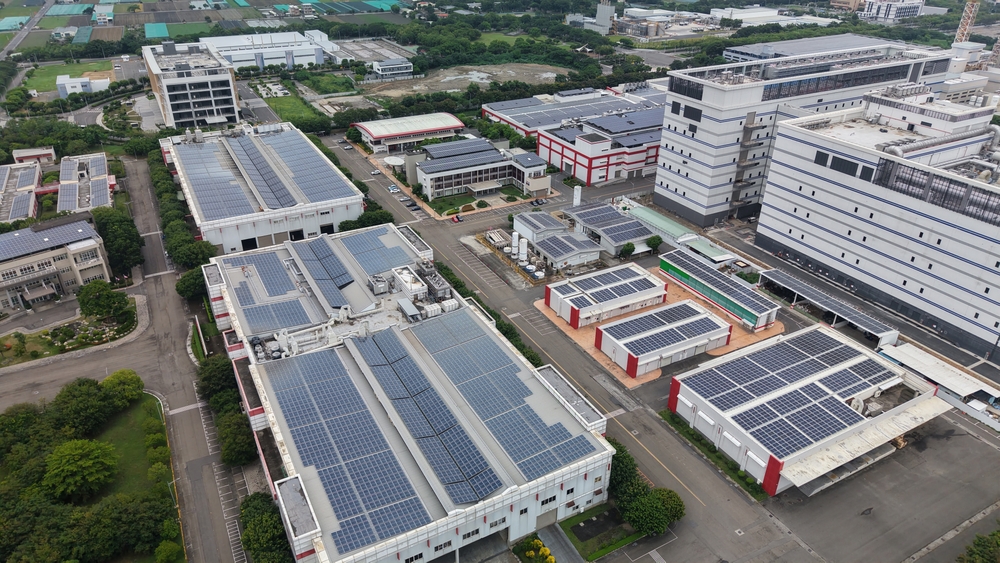
Major colocation and hyperscale facilities across tropical Asia have deployed primarily monocrystalline panels with capacities ranging from 1.0-2.0 MW per site. Their reported performance factors (actual generation divided by theoretical maximum) average around 72-76%, consistent with the derating factors mentioned earlier.
Smaller colocation facilities using polycrystalline panels show similar performance factors, suggesting that in tropical climates, the practical difference between technologies is less pronounced than spec sheets suggest. The gap narrows because all panels underperform expectations in high-heat, high-humidity conditions.
A decision framework
For data centre operators evaluating solar panel options in tropical climates, here's a practical decision framework:
Choose monocrystalline if:
- Roof space is limited relative to power needs
- You're targeting maximum generation from available area
- Budget allows for 15-20% premium over alternatives
- Long-term (20+ year) infrastructure investment aligns with company planning
- Facility is designed for high-reliability operations where proven technology matters
Choose bifacial monocrystalline if:
- You have white or highly reflective roofing
- Installation design allows adequate rear-side clearance
- You can absorb 10-15% additional cost for 10-20% additional output
- You're doing new builds or major retrofits where mounting optimization is feasible
Choose polycrystalline if:
- Available roof area exceeds immediate needs
- Cost per watt is the primary decision driver
- You're doing phased rollouts and proving ROI before scaling
- Facility roof structure has load limitations (lighter panels needed)
Avoid thin-film unless:
- You have access to substantial ground-level or adjacent land
- Roof load capacity is severely constrained
- You're in an exceptional situation where space isn't the limiting factor
Beyond the panel: the system matters
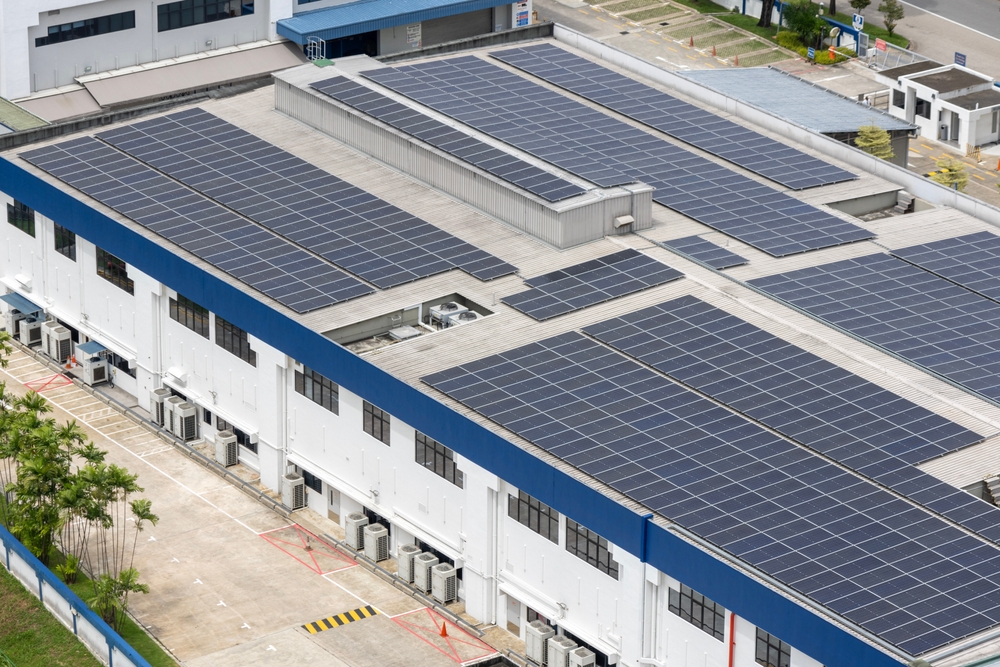
It's worth noting that panel selection is just one component of system performance. Inverter quality, mounting system design, electrical infrastructure, and monitoring systems all influence actual output.
Don't fixate on panel selection while neglecting the broader system design. Considering structural capacity, electrical integration, maintenance accessibility, and monitoring capabilities matters more than marginal efficiency differences between panel technologies. Companies like Eigen Digital help you monitor the performance of your system in operation.
FAQ
Q: How much power can I realistically expect from solar panels on my data centre roof in tropical climates?
A: For typical monocrystalline installations in tropical regions, expect 3.5-4.5 kWh per installed kW per day on annual average, depending on specific location and local weather patterns. A 1 MW (1,000 kW) system would generate approximately 1,300-1,600 MWh annually. This accounts for tropical derating factors. To put it in perspective, this offsets roughly 8-12% of a typical mid-size data centre's annual consumption, or covers a significant portion of cooling loads during peak sun hours.
Q: Do solar panels affect my data centre's cooling load?
A: Yes it will, and positively. Roof-mounted solar panels provide shade that reduces heat gain through the roof surface, potentially lowering cooling requirements by 3-8% depending on roof characteristics. This creates a double benefit: power generation plus reduced cooling demand. The effect is most pronounced on darker roofing materials that absorb significant heat without solar panels.
Q: How long before solar panels need replacement on data centre rooftops?
A: Quality monocrystalline panels should maintain 80-85% of original output after 25 years in tropical climates. However, many data centres plan for panel upgrades after 15-20 years to take advantage of improved technology, even if original panels remain functional. Inverters typically need replacement after 10-15 years.
Q: Can I mix different panel types on the same roof?
A: Technically yes, but it complicates electrical design and monitoring. Different panel types have different voltage and current characteristics, requiring separate inverter strings or careful array configuration. Generally, it's simpler and more efficient to stick with a single panel technology per installation phase. If you're doing phased rollouts over years, different technologies in different phases can work, but within a single phase, uniformity is preferable for operational simplicity.
Q: How do I know if my data centre roof can support solar panels?
A: Engage a qualified structural engineer to conduct a load capacity assessment. They'll evaluate existing roof structure, dead loads, live loads, wind loading, and safety factors. This assessment should happen before you get quotes from solar installers. Reach out to us to find out more.
Q: What happens to solar generation during frequent rain and overcast periods in tropical climates?
A: Panel output drops to 10-30% of clear-sky capacity during heavy cloud cover, and essentially zero during rain. However, most tropical locations average 4.0-5.0 peak sun hours daily even accounting for weather, making solar economically viable. Data centres don't rely on solar as their sole power source. Panels supplement grid power and reduce overall consumption. Battery storage can help smooth the variability, but most installations operate as grid-connected systems without storage due to cost considerations.
Q: How much maintenance do solar panels require on data centre roofs?
A: Quarterly professional cleaning is recommended for tropical installations to maintain optimal performance. Annual electrical inspections and monitoring system checks are essential. Inverters need servicing every 2-3 years. Budget approximately 1-2% of system cost annually for maintenance. Critical: ensure maintenance contracts include proper safety protocols for working around data centre critical infrastructure. In tropical climates, the combination of humidity, dust, and pollution makes regular cleaning more important than in drier climates.
Ready to explore solar for your data centre?
Choosing the right solar panel technology is just the beginning. Our approach starts with understanding your facility's constraints; roof capacity, power requirements, budget parameters, and operational priorities, before recommending technology. We've worked with colocation providers, hyperscalers, and enterprise data centres to implement solar systems that deliver real, measurable results.
Get a customized feasibility assessment for your facility. We'll evaluate your roof structure, model realistic generation potential accounting for your local climate, and provide transparent ROI projections based on actual regional deployment data.


